


Does the 2025 Mitsubishi Outlander Sport’s All-Wheel Control (AWC) make a real difference for winter driving near Peoria, IL?
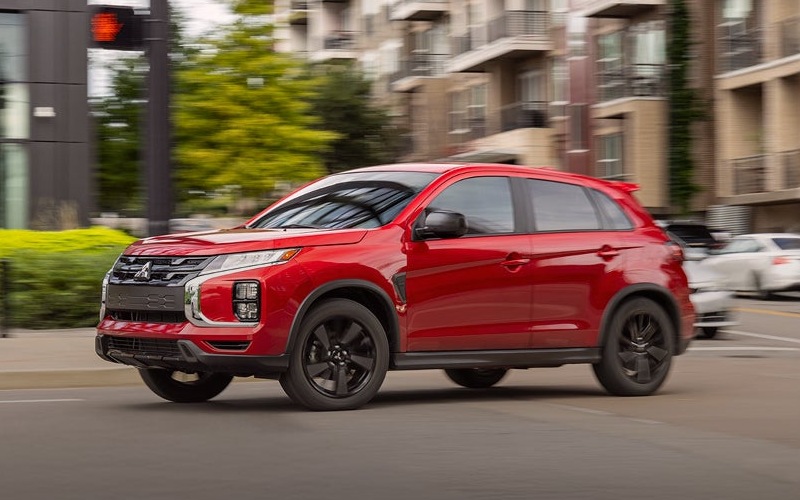
O’Brien Mitsubishi – Does the 2025 Mitsubishi Outlander Sport’s All-Wheel Control (AWC) make a real difference for winter driving near Peoria, IL?
Drivers across Central Illinois expect their compact SUV to handle slush, sleet, and surprise freeze-thaw cycles. The question is whether the 2025 Mitsubishi Outlander Sport’s All-Wheel Control (AWC) delivers a meaningful advantage when the forecast turns messy. The short answer isn’t the story—what matters is how AWC works with the vehicle’s suspension, steering, and safety systems to keep you confident on real roads, in real weather.
AWC in the Outlander Sport is designed to optimize traction by managing torque to the wheels as conditions change. On wet pavement, it limits slip and helps maintain a stable, predictable path. In light snow, it supports smoother launches from stoplights and more reassuring cornering. Because the system is integrated with Electric Power Steering, the Front MacPherson Strut Suspension with Stabilizer Bar, and the Rear Multi-Link Suspension with Stabilizer Bar, you get a composed, controlled feel instead of harsh corrections or sudden surprises. For most winter commutes, this seamless coordination is exactly what reduces fatigue and keeps your focus where it belongs—on the road ahead.
Of course, traction is only part of safe winter driving. The 2025 Outlander Sport layers in visibility and driver assistance technologies that make a real-world difference. Standard LED Low And High Beam Headlights deliver crisp light in low-contrast conditions; Automatic High Beam (AHB) helps you keep the road illuminated without constant manual toggling. Available LED Fog Lights add clarity when snow is blowing or precipitation hangs in the air. When you need to clear your windshield quickly, front rain-sensing wipers are ready to automatically adapt to changing intensity.
Safety systems matter when the unexpected happens. Forward Collision Mitigation (FCM) with Pedestrian Detection can help reduce or avoid frontal collisions, which is especially valuable when stopping distances increase in cold temperatures. Lane Departure Warning (LDW) helps you maintain lane discipline on partially plowed roads, and Blind Spot Warning (BSW) with Lane Change Assist (LCA) and Rear Cross Traffic Alert (RCTA) are available to support safer merges and backing maneuvers when snowbanks block sightlines. Underneath it all, RISE body construction is engineered for energy absorption, working with airbags and Active Stability Control (ASC) to help protect occupants.
Another common question is whether you need to step up to the available 2.4L MIVEC DOHC 4-Cylinder for winter driving. While the standard 2.0L MIVEC DOHC 4-Cylinder is more than capable for commuting, the 2.4L engine delivers stronger passing power—useful when you want to minimize time in slushy spray while overtaking. Either engine benefits from the CVT’s smooth power delivery, helping you maintain traction and avoid abrupt shifts when grip is limited.
If connectivity is part of your winter travel plan, the Outlander Sport’s 8.0-inch Smartphone-Link Display Audio (SDA) with Apple CarPlay® and Android Auto makes it simple to get weather-aware navigation and voice-controlled calls. With Bluetooth® Wireless Technology, HD Radio®, and available SiriusXM®, you can keep tabs on conditions and adjust routes on the fly. Heated front seats are available to take the chill out of early morning starts, and heated power side mirrors help maintain clear views.
To decide which trim fits your winter needs, map your must-haves. AWC is standard, so focus on the visibility add-ons you’ll use most—LED Fog Lights, AHB, and power mirrors—as well as safety enhancements like BSW with LCA and RCTA. If your routes include frequent highway merges or rolling terrain, consider the SEL’s 2.4L MIVEC DOHC 4-Cylinder for extra confidence. Finally, bring your phone and pair it during a test drive to confirm the SDA experience works the way you expect, including voice commands and quick access to your favorite winter-weather apps.
Frequently Asked Questions:
Does AWC require driver input to engage?
No. All-Wheel Control (AWC) continuously optimizes traction without driver intervention. You drive normally while the system manages torque to support stability and grip.
Which trims include Blind Spot Warning (BSW) with Lane Change Assist (LCA) and Rear Cross Traffic Alert (RCTA)?
These features are included on SE and SEL, adding useful awareness for winter traffic patterns and snowbank-obstructed views in parking areas.
Is the 8.0-inch Smartphone-Link Display Audio (SDA) standard on all trims?
LE, SE, and SEL include the 8.0-inch SDA with Apple CarPlay® and Android Auto. S and ES feature a 7.0-inch display audio system.
When you are ready to put AWC to the test, schedule a drive on the roads you use after a snowfall and include a stretch of highway and a few tight parking maneuvers. You will feel how traction, visibility, and assistive tech work together in a way that is calm, predictable, and confidence-building. O’Brien Mitsubishi is proudly serving Peoria, East Peoria, and Lincoln with knowledgeable guidance on trims, safety, and technology, so you can find the Outlander Sport that meets your winter-ready expectations.
0 comment(s) so far on Does the 2025 Mitsubishi Outlander Sport’s All-Wheel Control (AWC) make a real difference for winter driving near Peoria, IL?