


Which AWD delivers more real-world control for Peoria, IL drives — S-AWC on the 2026 Eclipse Cross or Symmetrical AWD on the 2026 Crosstrek?
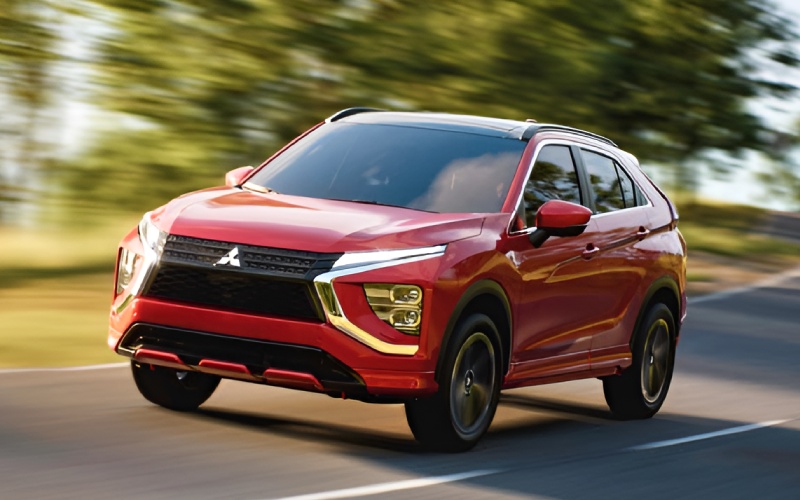
O’Brien Mitsubishi – Which AWD delivers more real-world control for Peoria, IL drives — S-AWC on the 2026 Eclipse Cross or Symmetrical AWD on the 2026 Crosstrek?
When comparing the compact SUVs most drivers have on their short list, a common question pops up: which AWD system provides more confidence in day-to-day driving on Midwestern roads? The 2026 Mitsubishi Eclipse Cross arrives with Super-All Wheel Control (S-AWC) standard on every trim, while the 2026 Subaru Crosstrek uses Symmetrical All-Wheel Drive across the lineup. On paper, both are full-time systems designed for stability and traction. On the street, however, the way each system integrates with suspension tuning, stability control, and power delivery can create noticeably different driver impressions.
S-AWC is the centerpiece of the Eclipse Cross approach. It coordinates torque front-to-rear and side-to-side by integrating traction control, braking intervention, and Active Yaw Control to maintain the vehicle’s intended line through corners and during quick transitions. The result is a planted, predictable feel in roundabouts, cloverleafs, and patchwork pavement—exactly the conditions drivers around Peoria, IL encounter every week. Subaru’s Symmetrical AWD is a well-proven layout that prioritizes balanced weight distribution and consistent traction. Paired with X-MODE on select trims, it’s very capable at low speeds on slick or loose surfaces. The difference you sense behind the wheel is that S-AWC’s integrated control often reduces the need for steering corrections and helps the vehicle feel more composed as speeds increase or surfaces change mid-corner.
How S-AWC influences everyday driving
In practice, S-AWC helps the Eclipse Cross rein in small slips before the driver ever notices. That poise shows up when transitioning from dry to damp asphalt after a sun-shower, cresting a rise on I-74, or angling into a tight city turn with camber changes and lane ruts. Because the system is actively coordinating grip and rotation, the steering remains calm and the body stays settled, which reduces fatigue on longer drives. Subaru’s Symmetrical AWD, by contrast, keeps a reliable stream of torque going to all wheels, which is reassuring in straight-line conditions and helpful in light off-pavement use. For many shoppers the choice comes down to an AWD system that feels more active in maintaining the intended line through a corner (S-AWC) versus one that prioritizes even, continuous traction (Symmetrical AWD).
Key technology and feature context
Matching AWD confidence with smart tech can tip the scales. The Eclipse Cross offers a Multi-View Camera System on upper trims for 360-degree visibility in crowded lots and angled curbside parking, plus available Power Folding Side Mirrors and a Handsfree Power Tailgate that take the hassle out of tight spaces and busy hands. Mitsubishi Connect with Safeguard And Remote Services (trial period available with enrollment) brings remote lock/unlock and emergency services into one app. Subaru’s Crosstrek counters with standard EyeSight® Driver Assist Technology, available DriverFocus Distraction Mitigation System, and available Blind-Spot Detection/Rear Cross-Traffic Alert—robust aids for driver awareness. Where the Eclipse Cross separates itself is the combination of active traction control in S-AWC and low-speed visibility tech that makes parking and urban maneuvering calmer.
- S-AWC integration: Coordinates torque, braking, and Active Yaw Control to stabilize cornering and transitions.
- Everyday visibility: Available Multi-View Camera System and Power Folding Side Mirrors simplify tight maneuvers.
- Tailgate convenience: Available Handsfree Power Tailgate supports quick cargo drops when hands are full.
Subaru Symmetrical AWD perspective
Subaru’s Symmetrical AWD has earned trust for good reason. Its balanced layout supports surefooted traction in variable weather, and with X-MODE on select trims, it enhances control at low speeds on loose surfaces. EyeSight® with adaptive cruise control and lane-centric aids enhances long highway stints, while generous ground clearance gives the Crosstrek a confident stance on unmaintained paths. For shoppers looking at occasional gravel travel or winter trailhead parking, those traits are meaningful. The deciding factor for many test-drivers is the subjective difference in steering calm and mid-corner composure at typical commuting speeds—places where S-AWC’s extra layer of control shows up most clearly.
Test-drive checklist for Peoria-area shoppers
To feel the differences quickly, structure a short route that includes a couple of highway on-ramps, a tight 90-degree city turn, and a few blocks of broken pavement. Listen for steering corrections and note body motion as you merge, exit, and brake for turns. In the Eclipse Cross, you should sense the chassis settling early and holding its line with minimal fuss. In the Crosstrek, expect balanced traction and predictable responses, especially at lower speeds. The better fit becomes clear once you pay attention to how relaxed your inputs feel in each SUV.
- On-ramp sweep: Note steering calm and mid-corner stability.
- Tight city turn: Watch for early-settling body control and easy throttle pickup.
- Broken pavement: Feel for reduced kickback and stable tracking.
Ownership confidence matters too
Beyond the drive, the 2026 Eclipse Cross brings an industry-leading 10-year/100,000-mile Powertrain Limited Warranty and 2-year/30,000-mile Limited Maintenance for added peace of mind. That coverage layers practical value onto the AWD and visibility advantages already built into the vehicle. The Crosstrek’s warranty follows the familiar 5-year/60,000-mile powertrain plan and, on the right trim, adds a broad suite of driver assistance. If long-haul coverage is a priority, Mitsubishi’s terms are tough to overlook.
Frequently Asked Questions:
Does S-AWC make a difference at normal commuting speeds?
Yes. S-AWC’s integration of stability, braking, and torque control improves composure during common maneuvers like merging, lane changes, and sweeping turns, which helps the Eclipse Cross feel settled and predictable.
Can the Eclipse Cross handle light trails and gravel roads?
Yes. S-AWC and multiple drive modes maintain traction and stability on mixed surfaces, while the chassis aims for comfort and control. For more rugged use, always review route conditions and choose appropriate tires.
What visibility tech helps with tight city parking?
The available Multi-View Camera System provides a 360-degree perspective, while available Power Folding Side Mirrors help in narrow spaces. These features work together to reduce guesswork in low-speed maneuvers.
Where can I compare both SUVs back-to-back?
Schedule an Eclipse Cross test drive and bring your route plan. Then visit a nearby retailer for a Crosstrek drive on the same roads. A direct comparison clarifies which SUV feels more composed and convenient for your routine.
When you are ready to experience S-AWC and the Eclipse Cross feature set, visit O’Brien Mitsubishi to set up a test drive and walk through trims. Our team is serving Morton, Peoria, and East Peoria with friendly, knowledgeable guidance so you can make a confident decision that fits everyday life.
0 comment(s) so far on Which AWD delivers more real-world control for Peoria, IL drives — S-AWC on the 2026 Eclipse Cross or Symmetrical AWD on the 2026 Crosstrek?