


Which AWD system inspires more confidence around Peoria, IL: S-AWC on Eclipse Cross or Real Time AWD on HR-V?
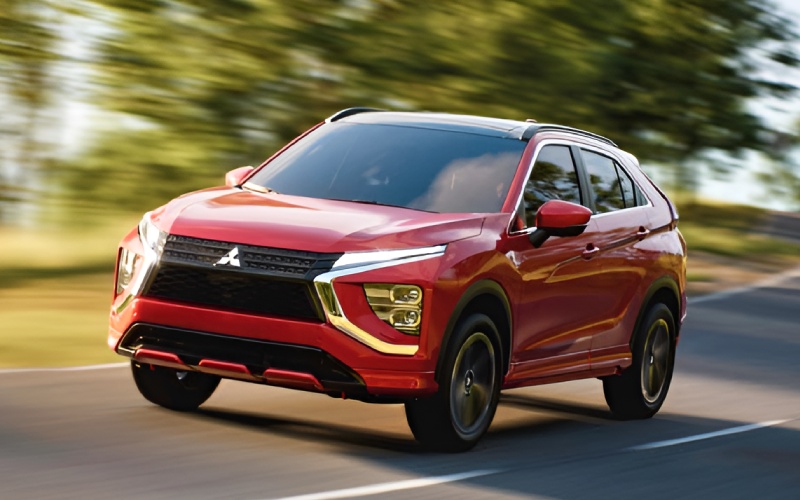
O’Brien Mitsubishi – Which AWD system inspires more confidence around Peoria, IL: S-AWC on Eclipse Cross or Real Time AWD on HR-V?
When Midwest weather turns unpredictable, traction technology becomes more than a spec sheet talking point. It’s the core reason many shoppers weigh the Eclipse Cross against the HR-V. Mitsubishi’s Super-All Wheel Control (S-AWC) is standard across all 2026 Eclipse Cross trims, blending front-to-rear torque distribution with vehicle dynamics logic and Active Yaw Control (AYC) to help you hold a clean line on wet, snowy, or uneven pavement. Honda’s Real Time AWD™ on the 2026 HR-V is available and quick to send power rearward as slip is detected, delivering secure, predictable handling for all-season driving. The difference lies in what’s working behind the scenes: S-AWC is an integrated handling system designed to proactively assist traction and cornering, while Real Time AWD™ is an effective, reactive traction aid. For many drivers facing snow-packed commutes or slushy intersections, that distinction is often felt as steadier take-offs and more composed cornering in the Eclipse Cross.
Beyond the AWD strategies, consider how each platform supports you when the weather gets rough. The Eclipse Cross makes every model winter-ready with standard all-wheel drive and offers practical features that build confidence: available 360-degree Multi-View Camera System for close-quarters visibility, heated front seats on popular trims, an available heated steering wheel for cold mornings, and an available Handsfree Power Tailgate to keep gloves on and hands free. The HR-V counters with standard Honda Sensing® on every trim, bringing collision mitigation, lane keeping, and adaptive cruise features that work year-round. If you want traction technology that’s standard across the board, plus available features designed around cold-weather convenience, the Eclipse Cross earns an advantage. O’Brien Mitsubishi is serving Morton, Peoria, and East Peoria with product specialists who can walk you through the system details and set up a route that mimics your everyday drive.
- AWD availability: S-AWC is standard on every Eclipse Cross; Real Time AWD™ is available on HR-V.
- Control logic: S-AWC layers Active Stability Control and AYC to assist with traction and cornering; Real Time AWD™ responds quickly to slip.
- Cold-weather features: Eclipse Cross offers available heated steering wheel and a Multi-View Camera System; HR-V offers heated front seats and available parking sensors.
- Towing utility: Eclipse Cross is factory-rated up to 1,500 pounds; HR-V is not factory-rated to tow in the U.S.
If you regularly navigate unplowed neighborhood streets or steep alleyways, standard S-AWC simplifies the buying decision: you don’t need to select a specific trim or option package to get full-time confidence. The Eclipse Cross’s turbocharged 1.5-liter adds helpful low-rpm torque for pulling away from icy stop signs and merging onto slick highways. HR-V’s naturally aspirated 2.0-liter prioritizes smooth delivery, and paired with available Real Time AWD™, it provides stable, predictable control in most winter conditions. Your best choice comes down to how often you face challenging surfaces and how much you value a system that is standard on every trim.
For an apples-to-apples feel, schedule back-to-back drives on the same loop—mixing tight turns, stop-and-go, and a few rough patches. Ask your product specialist to explain how S-AWC’s AYC works, and try tip-in throttle through a snowy corner to feel how the Eclipse Cross tracks. Then drive the HR-V and note how its system responds as slip emerges. That firsthand comparison will make your decision easy.
Frequently Asked Questions:
Is S-AWC always active or only in certain modes?
S-AWC operates continuously, managing torque and brake inputs as conditions change. Drive modes adjust system behavior, but the core control logic is always on.
Does the HR-V’s Real Time AWD™ help on dry roads?
Yes. While designed for slip, the system can enhance stability and traction when cornering or accelerating on dry pavement, especially in changing conditions.
Can I tow a small trailer with either vehicle?
The Eclipse Cross is factory-rated up to 1,500 pounds, suitable for a small trailer or weekend gear. The HR-V is not factory-rated to tow in the U.S., so trailering is not recommended.
For personalized guidance and a demonstration route that mirrors your routine, visit our showroom team at O’Brien Mitsubishi. We’ll help you compare systems side by side so you can buy with confidence.
0 comment(s) so far on Which AWD system inspires more confidence around Peoria, IL: S-AWC on Eclipse Cross or Real Time AWD on HR-V?